

As in previous years, the conflict in the Gaza Strip is once again a focus of the Munich Security Conference. A comparison with last year clearly illustrates how far the conflict resolution process has progressed and what still needs to be done.
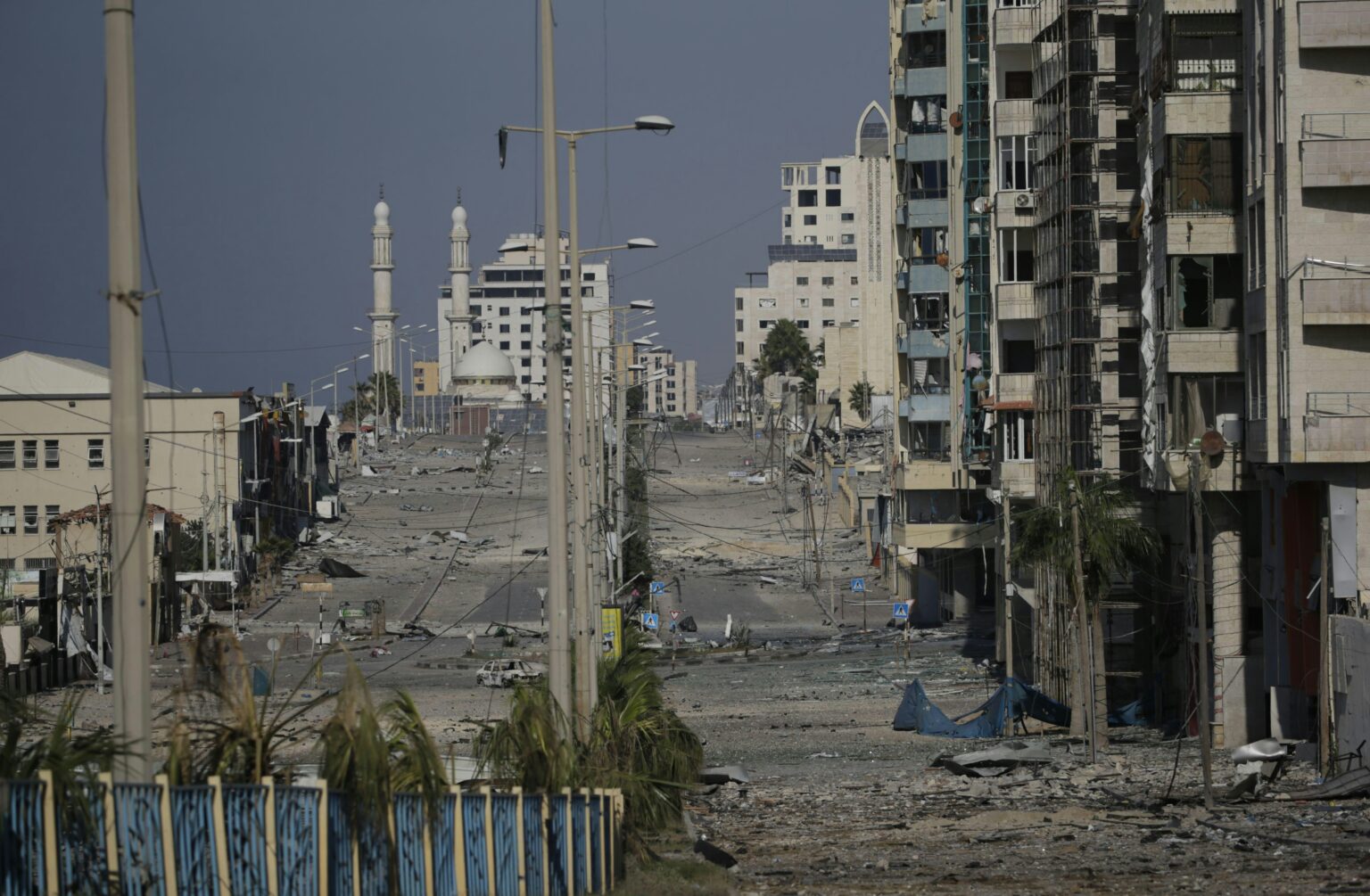
The good news first: The fighting in Gaza has subsided considerably. An official ceasefire is in place, but it is fragile and is repeatedly violated. Nevertheless, the difference compared to the war before it began last October is significant, with airstrikes having decreased considerably.
The bad news, which was also emphasized by various parties at the security conference, is that this ceasefire is extremely fragile. While the theoretical plan is clear – the disarmament of Hamas and the withdrawal of Israel from Gaza – the path to achieving this and the question of how much time the negotiators have to do so remain unclear.
This was also emphasized by the Palestinian Authority’s Foreign Minister, Varsen Aghabekyan-Shaheen: “We need a timetable,” she said in Munich.
“We need to move very quickly.”
Diplomat Nikolai Mladenov, who heads the Board of Peace initiated by US President Donald Trump, is well aware of this: The plan is clear, he explained. Gaza must be controlled by a transitional authority, and all factions in Gaza—including Hamas—must be disarmed. These are the conditions for an Israeli withdrawal. Currently, the situation in the Gaza Strip is as follows: Roughly half is under the control of the Israeli army, the other half under that of Hamas. However, progress toward the reunification of the two territories is only supposed to be possible after Hamas is disarmed. “The reality is: We have to move very quickly,” said Mladenov.
Plans for this are expected to be presented at the Board of Peace meeting next week in Washington.
Meanwhile, the signs are ominous: Hamas refuses to surrender its weapons. This was recently emphasized again by the important Hamas leader Khaled Mashal at the Al Jazeera Forum in Doha. Taking weapons from an occupied people makes them “easy victims.” This was also made clear to the mediators in Qatar, Turkey, and Egypt, and thus also to the Americans. That’s hardly a sign of compromise.
If Gaza returns to war, Mladenov said, there’s no need for a peace council anymore. And that option exists: According to a report in the Times of Israel, Israel is reportedly drawing up plans to resume the war in the Gaza Strip. Israel only agreed to the ceasefire under pressure from the US administration. And recently, Israeli Prime Minister Benjamin Netanyahu visited US President and Peace Council Chairman Donald Trump in the United States and discussed Gaza during their visit.
“The division of Gaza must end.”
Diplomat Sigrid Kaag, who also sits on the Gaza Peace Council, is speaking at the security conference. She emphasizes that one must not be trapped in a partition of Gaza. And she is not alone in this sentiment.
Unlike last year, no politician from the current Israeli government is speaking at this security conference.
Much depends on the ongoing negotiations, potentially the lives of many people in the Gaza Strip and also in Israel. Mladenov mentions surprisingly clearly that the Palestinian Authority should play a role in the future – albeit with emphasis on the required reforms. Aghabekyan-Shaheen, in turn, stated that they are ready. And it is important not to view the Palestinians solely through a humanitarian lens. “A political approach is needed.”